

Throne Day, Moroccan Roots, and the UAE Skin They Were Made For
On 30 July, Morocco marks Throne Day — Fête du Trône, Eid al-Arsh. It commemorates the King's accession, and across the country it's a day of flags, parades, and family. For me, living and building a brand in the UAE, it's the one day of the year I let myself write plainly about where this brand actually comes from, and why that origin still shapes every bottle we sell here.
I'll keep the promise I make to readers: this is a founder note, not a sales pitch dressed as one. There's one product in it, near the end, because it's the one that carries the most of this story. The rest is the honest version of how Moroccan and Middle Eastern beauty tradition became a skincare line formulated for UAE skin.
 |
Featured in this article
Scent-free rose, argan & 24k gold day oil
AED 182Shop now
|
What Throne Day means, and why I write about it here
Eid al-Arsh is a national day, but in most Moroccan households it's also domestic — the cooking, the gathering, the older women running the kitchen. My memory of these days isn't political. It's sensory. It's the smell of rose water, the feel of argan oil worked into hair before everyone got dressed, the small rituals that the women in my family treated as ordinary maintenance rather than luxury.
I write about it here, on a UAE skincare brand's blog, because those ordinary rituals are the actual source material for what we make. Not a marketing reference. The actual formulas. When I tell you our products draw on Moroccan and Middle Eastern tradition, I mean the specific practices I grew up inside, brought into a lab and tested against the climate of the country I now live in.
From a software career to a cosmetics bench
I didn't train as a cosmetic chemist. I trained as a software engineer, and I spent years reading code the way you read something you don't trust — looking for the line that breaks everything. When I started looking at the ingredient lists on the products I was buying, the habit transferred. I read them like code reviews. Too many of them were padded with filler, fragranced heavily to cover cheap bases, and making "natural" claims that the ingredient list quietly contradicted.
That frustration is where the brand started — first in Belgium, where I was living, and then home to the UAE. The engineering background isn't decoration. It's why we're strict about what goes in, why I can explain the function of every ingredient on the label, and why I won't write the word miracle on anything. Skin doesn't respond to miracles. It responds to the right fatty acids, consistent use, and a barrier that's protected from the climate it lives in.
The ingredients are heritage, but the formulation is for the UAE
Here's the distinction I care about most, and the one Throne Day lets me explain properly.
The ingredients are Moroccan and Middle Eastern: argan from the south of Morocco, damask rose, oud from the Gulf, prickly pear, jojoba. These aren't trends I picked up. They're materials my family used, with histories that go back generations in this part of the world.
But the formulation is for here — for UAE skin, in UAE conditions. Argan oil used in a temperate European climate does one job. The same argan, formulated for a place with 45°C summers, hard mineral-heavy tap water, and air conditioning running for most of the year, has to do a different one. Re-engineering the old materials for the new climate is the whole point of the brand. The heritage gives us the what; the climate here gives us the how.
That's also why I'm careful about how I describe our origins. We are a Moroccan and Middle Eastern brand, based in the UAE. I don't stretch that into something it isn't. The honesty matters to me as much as the formulation does — they come from the same place.
Rose: the thread that runs through all of it — ward
If one ingredient ties Moroccan tradition to UAE skincare, it's rose — ward. In the Dadès Valley in Morocco, the rose harvest is an event the whole region turns out for, and rose water has been a daily-use product across the Middle East for centuries, not a special-occasion one. It's gentle, it tones, it calms skin that's reacting, and it suits almost every skin type.
For UAE skin specifically, rose earns its place because of how the climate works. Skin here is so often dehydrated under heat — water pulled out by cold AC air while the surface runs oily from the warmth. A rose-based product gives you gentle, water-light hydration without the heaviness that makes summer skin feel worse. It's the ingredient I trust most for the in-between skin that this climate creates.
My grandmother's argan, and what I changed
My grandmother kept argan oil within reach in two rooms of the house. She used it on hair, on skin, on the dry patches the dry inland air gave everyone. She never called it skincare. It was just what you did.
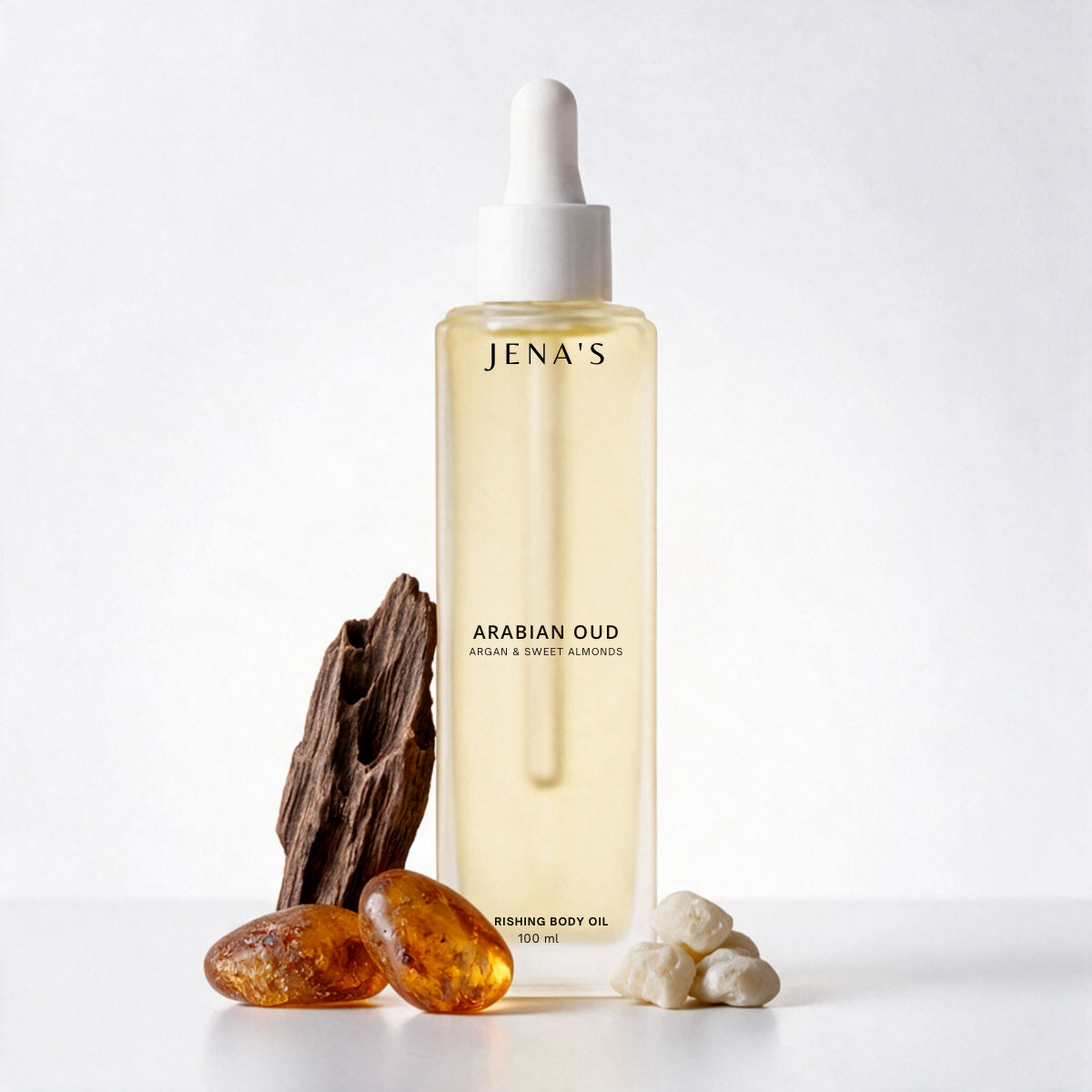
What I changed wasn't the ingredient — it was the precision. She used whatever pressing she could get. We control the quality, the purity, and crucially the pairing: which oil for morning, which for night, which for hair, which for body, formulated so each one absorbs correctly in this climate rather than sitting on top of skin that's already coated by hard-water minerals. The tradition told me argan belongs in daily life. The engineering decides exactly how to deliver it here.
The one product I'll put in this note: The Liquid Glow
If you want a single bottle that carries this whole story, it's The Liquid Glow 30ml (AM) — our morning face oil, built around Moroccan rose.
I made it as a morning oil deliberately. It's light, it absorbs cleanly, and it sits well under sunscreen, which in the UAE is non-negotiable year-round. Rose for calm, gentle hydration; a texture engineered to behave in heat rather than fight it. It's the most direct line I can draw from a Throne Day kitchen full of rose water to a product you can actually use under your makeup on a 45°C Tuesday.
I'll leave it there, as promised — one product, in a note that's really about where it comes from.
What I hope you take from Throne Day
Not nostalgia. I'm wary of beauty brands that sell heritage as a feeling and deliver nothing underneath it. What I hope you take is the opposite: that the old rituals were practical, that they were built by women solving real problems with the materials they had, and that the most respectful thing I can do with that inheritance is to keep it practical — test it, formulate it properly, and make it work for the skin of the women living in this climate now.
Eid Arsh Mubarak to everyone marking the day. And to everyone reading from the UAE, whatever your background: the routine is for you, wherever the rose came from.
Frequently asked questions
Is Jena's Cosmetics a Moroccan brand or a UAE brand? Both, honestly. The founder is of Moroccan and Middle Eastern heritage and the ingredients and rituals are drawn from that tradition. The brand was started in Belgium and is now based in the UAE, with every product formulated specifically for UAE skin and climate.
Why does Moroccan heritage matter for skincare made for the UAE? The ingredients — argan, damask rose, oud, prickly pear — come from Moroccan and Middle Eastern tradition with long histories of real use. The formulation then adapts those materials for UAE conditions: extreme heat, hard water, and constant air conditioning.
What is The Liquid Glow and who is it for? It's a morning face oil built around Moroccan rose, designed to be light, absorb cleanly, and sit well under sunscreen. It suits people who want gentle morning hydration without heaviness, particularly in a hot, air-conditioned climate.
Is rose water good for oily or combination skin? Yes. Damask rose water is gentle, lightly toning, and suits almost every skin type, including oily and combination skin that's also dehydrated — a common state in the UAE climate.
Are the ingredients genuinely from Morocco and the Middle East? The signature ingredients are sourced from this tradition — argan from Morocco, oud from the Gulf, damask rose. The brand is explicit about being Moroccan and Middle Eastern rather than claiming a broader or global origin.
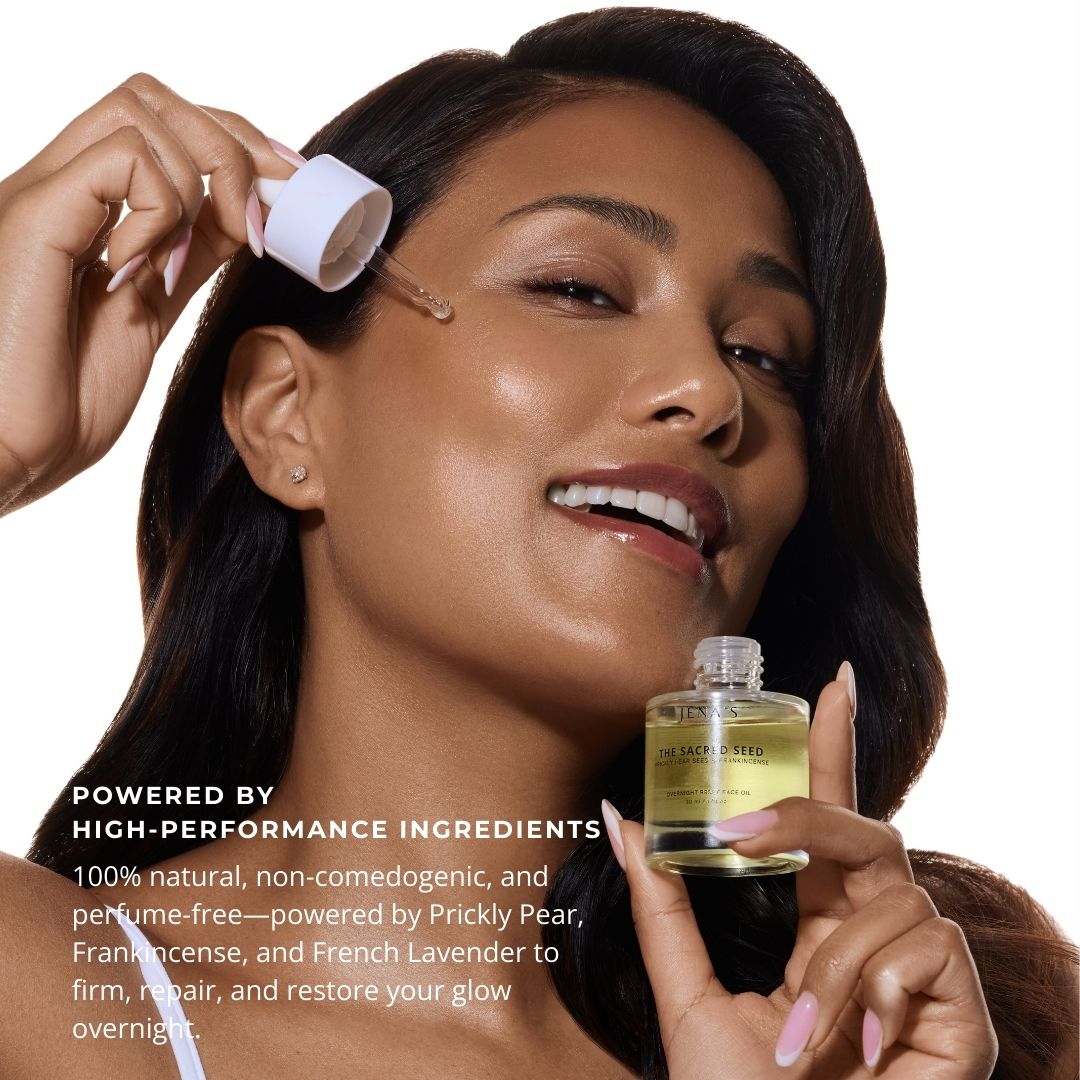
Can I use The Liquid Glow at night instead of morning? It's formulated as an AM oil because it's light and works under sunscreen and makeup. At night, a richer oil (like a prickly pear PM oil) better supports the skin barrier during repair. Many people use a morning/night split for this reason.







Leave a comment
This site is protected by hCaptcha and the hCaptcha Privacy Policy and Terms of Service apply.